In this paper, you will use your defined problem from M4A1 to create an implementation and evaluation plan for a CDSS to solve the problem. In your paper, you will draw upon the readings and assignments thus far to evaluate the current environment in which the problem exists, policies and procedures, training needed, implementation stages, and a process for evaluating the outcome.
The 10-12 page final project (excluding title page and reference list; abstract not required) will be an expanded version of the project proposal and should include all of the following criteria:
Implementation Context (20 points):
Describe the problem, the setting, and the context.
Identify impacted end user(s).
Breakdown the workflow of the impacted end user(s) without the technology and predict workflow with the technology.
Identify key stakeholders who need to ‘buy-in’ to solution’s implementation and the importance of their buy-in.
Assess competing solutions for the proposed CDSS which expands upon their existing gaps or inevitable competition for the proposed CDSS.
Implementation Approach (20 points):
Identify key champions who garner change for a successful clinical implementation.
Identify risks upon implementation and subsequent methods to mitigate identified risks relating to any existing impediments (change management, behavior management, cultural notions, etc.).
Describe data sources needed and extracted from source systems, and the complexity of obtaining such data elements.
Implementation Plan (20 points):
Create a roll-out plan for health care organization to include target areas such as specific service lines, levels of care, etc.
Develop an education plan required to train clinical (or other) end users.
Discuss how you will ensure connectivity and integration to databases encompassing data sources needed for the solution’s success.
Predict environmental and cultural factors which may inhibit the success of the solution.
Outline methods to mitigate risk with the product’s implementation such as change management, behavior management, cultural notions, data obtainment, data timeliness, etc. (specifically to speak to your identified clinical or project champion).
Evaluate existing policies/processes which need to change in order to accommodate the implementation of the CDSS.
Implementation Goals & Evaluation (20 points):
Compose the goals/outcomes which prove the success (or lack thereof) of the solution’s implementation.
Describe the framework or theory to be utilized as the conceptual underpinning of the project and to assist in the evaluation of the project.
Design the methodology of obtaining feedback in order to measure the success of the solution’s implementation.
Discuss the milestones that must be achieved before further-roll out of the CDSS occurs across the organization.
Implementation Approach
Implementation Context (20 points):
Describe the problem, the setting, and the context.
The medications related to CDSS are designed to help physicians make decisions related to a patient’s health. Patient-related findings are majorly associated with the correct diagnosis and treatment of the patient. Medication-related CDSS is focused on cutting down the costs of medical errors (Castaneda et al., 2015). Medical errors performed in health provision institutions are costly financially and to the lives lost because of them. For instance, if a diagnostic CDSS is applied in a clinic, the possibility of any diagnostic errors is minimized. Medical-related CDSS can be used in other healthcare institutions like dispensaries, nursing homes, and mental health institutions. The medical-related CDSS is capable of doing more than diagnostic support in the treatment process.
Identify impacted end user(s).
The most directly impacted parties with the medical-related CDSS are physicians, nurses, and patients. The physicians and nurses have their jobs simplified with the introduction of the computerized approach of administering treatment. On the other hand, patients need to trust that the medical-related CDSS is reliable and can be authorized (Miller at al., 2015). In recent years with the rise of technology, it is observed that human beings take time to adjust to new approaches, especially when their lives are at stake. It will require that they hear it from the healthcare providers that the CDSS is reliable and is the new switch.
Breakdown the workflow of the impacted end-user(s) without the technology and predict workflow with the technology.
Before computerized help, it was up to the physicians to decide what condition a patient was suffering and what prescription would work for them. He then leaves the role of monitoring the patient and recording any signs. Nurses can also advocate for the patient’s wellbeing and vice versa, but it is still up to the physician to establish if the treatment plan needs to be adjusted or is working well, and the patient is ready for discharge (Maben et al., 2012). All this was done by the eye’s look, the signs the patient displays, and how the patient themselves says they are feeling. This was the root of most of the medical errors performed. However, this changes with the introduction of the CDSS. With the introduction of technology in health provision, errors, and adverse events are evaded, and the health outcomes are enhanced (Ingebrightsen et al., 2014). Major health decisions are governed by the CDSS, limiting all possible errors.
Identify key stakeholders who need to ‘buy-in’ to the solution’s implementation and the importance of their buy-in.
The decision to implement a medical-related majorly lies on the physicians, patients, and the legislative and regulatory bodies. The physicians play a significant role because they will work hand in hand with the CDSS, and they must give positive feedback to consider implementation (Pope et al., 2013). It is also more of the physician’s role to enlighten the patients about the CDSS and the benefits that come with it for them to buy in. patients are required to buy into the idea of implementation because the CDSS will be used determine their wellbeing. They need to be in line with that for the execution to take place. Finally, the other body whose buy-in is essential is the legislative and regulatory body. Without their say so, no implementation can take place. This body ensures that the CDSS is cost-efficient and maintainable.
Assess competing solutions for the proposed CDSS, which expands upon their existing gaps or inevitable competition for the proposed CDSS.
As the adoption and implementation of the CDSS systems rise, it will be essential to advance the plan (Castaneda et al., 2015). As more hospitals and physicians seek to adopt the technology, it will be necessary that formalized knowledge is developed to ensure the CDSS language is uniform and with exact meaning across various health facilities. Apart from formalized knowledge, another gap that needs to be sealed is the availability of a uniform database for all the systems for automatic and regular health information and guidelines on best health practices. It is a better and reliable way of ensuring high-quality patient care than conducting manual updates of the system. Further, engaging a single database ensures consistency and uniformity in the healthcare providence across the entire healthcare system (Miner et al., 2014). It also improves the trust of end-users of the system in a world where technology changes every day, encouraging further acceptance and adoption of the system.
Implementation Approach (20 points):
Identify key champions who garner change for a successful clinical implementation.
Clinical champions play a significant role in the processes of implementing the system. An ideal clinical advocate is considered to be one that is not only a clinician but also with adequate knowledge about informatics (Kirchner et al., 2012). They are considered trustworthy and competent professionals who can influence the choices and practices of others. In this case, physicians come out as major clinical champions in a clinic setting. Physicians are considered to be most knowledgeable are often given the leadership roles, which provides them with an upper hand in influencing others’ opinions, thus considered physician champions. The other notable champions are the nurse champions. They are either self-proclaimed champion nurses or selected by peers because of their demonstrated passion for improving healthcare delivery quality. Physicians and nurse champions are vital in influencing change for successful clinical implementation because they directly link with the patients. All efforts are aimed towards improving the quality of patient care. Physicians, nurses, and patients themselves stand a better chance of understanding what is required to improve care quality.
Identify risks upon implementation and subsequent methods to mitigate identified risks relating to any existing impediments (change management, behavior management, cultural notions, etc.).
The most expected risk after implementing the CDSS is the possible computer illiteracy for some of the staff who will be required to interact with the system (He et al., 2019). The system is entirely dependent on computer literacy. As a result, it will demand that staff be taken through some training sessions to ensure competence to minimize all possible errors. On the same note, the CDSS system is complex and requires checkups from time to time and constant technical maintenance. All these require skilled personnel. Another risk arises from the fact that this system also relies on external sources for patient data. Quality and reliable data directly impact the quality of decision-making and general health outcome. It is essential to ensure that the patient data sources are reliable and that the information is up to date to avoid further medical errors.
Describe data sources needed and extracted from source systems and the complexity of obtaining such data elements.
The data sources needed may include the Enterprise Resource Planning (ERP), mainframe computers, and Open Database Connectivity. Mainframe computers are often applicable in big corporations for vital applications like statistics and finances. Unlike most data sources, this data source has higher data processing performance. The ERP system is meant to integrate diversified data into one primary database or platform (Wang, Bai, Li & Ding, 2010). The ERP system is very complicated as it contains many tables that need one to understand correctly. Lastly, the Open Database Connectivity is an interconnection that permits the connection with database management and a linear data set. It consists of a manager and a driver which have various functions. However, these data elements may be complex to obtain because the primary sources have different characteristics, and they are managed by additional hardware and incompatible systems. For example, it is complex to get data from mainframe computers because they require a knowledgeable team that understands how it works. The ERP system is a complex system with many tables; hence the data extraction process may be more challenging than one thinks.
Implementation Plan (20 points):
Create a rollout plan for healthcare organizations to include target areas such as specific service lines, levels of care, etc.
Before a rollout is done, a communication plan must ensure most of the stakeholders are in line with the idea. Those who are directly affected by the system’s adoption deserve to know when to expect changes and what changes are expected. Open communication with the affected parties exposes the uncertainties of the implementation plan. The next step should be picking out the organization’s champions to come up with the implementation plan. The most critical positions to be filled in the implementation team should be an executive sponsor, an administrator, and other team members to sort out the roll out plan, adoption, and product evangelism.
Documenting critical information is also a crucial step in the rollout process. With the necessary information at hand, mapping out a timeline is next (Falconi, 2014). Timelines should be tied to critical milestones like data migration times, duration required for training, and when a full switch is expected. Finally, explain to the end users why processed are changing. Most preferably, a FAQ document should be made available.
Develop an education plan required to train clinical (or other) end-users.
The CDSS system is more likely to be more effective when well-trained users use it. When a user has a better understanding of how the procedure operates enhances the user’s ownership, making him more engaged. On the other hand, users who are less informed about the system are more likely to be resistant and disapprove of implementation. Knowledgeable individuals exhibit high acceptance of the performance of the system as compared to the inadequately enlightened. Knowing that the system is set to maximize their efficiency and safety in patient care also enhances adoption acceptance. Adequate training increases efficiency and competence when working with the CDSS. Individual computer skills also influence how the CDSS is used; therefore, additional computer classes may provide more satisfying and relieving experiences with the system.
Discuss how you will ensure connectivity and integration to databases encompassing data sources needed for the solution’s success.
Ensuring integration and constant connectivity is a significant factor in ensuring the clinical decision support system’s effectiveness. The method depends on these external sources for patient information, which requires that the data is reliable and up to date because the patient’s wellbeing relies on it. Because this information is highly sensitive, the notification must remain uniform across all systems. A uniform database comes out as a fundamental approach towards ensuring uniformity and regular updates on the patient data. A singular database provides regular and automatic updates on patient information, making it reliable. Far from this, a single database attracts more trust from the patients and clinicians than on various systems for information about a patient.
Predict environmental and cultural factors that may inhibit the success of the solution.
Lack of primary success factors like integrating the system in the clinical workflow, active alerts, and accessibility to electronic patient data are significant hindrances to the implementation of clinical decision support systems (Ahmadian et al., 2011). However, these systems’ success is further challenged by environmental and cultural factors, among other conditions. Inadequate or lack of computer skills among the physicians and the rest of the healthcare providers is a significant challenge towards the systems’ success. Far from this, other patients and healthcare providers are conservative and resist adopting the new technology. For example, conventional clinicians may resist attending training sessions, while resistant patients may not be ready to trust the latest technology with their health.
Outline methods to mitigate risk with the product’s implementation, such as change management, behavior management, cultural notions, data obtainment, data timeliness, etc. (specifically to speak to your identified clinical or project champion).
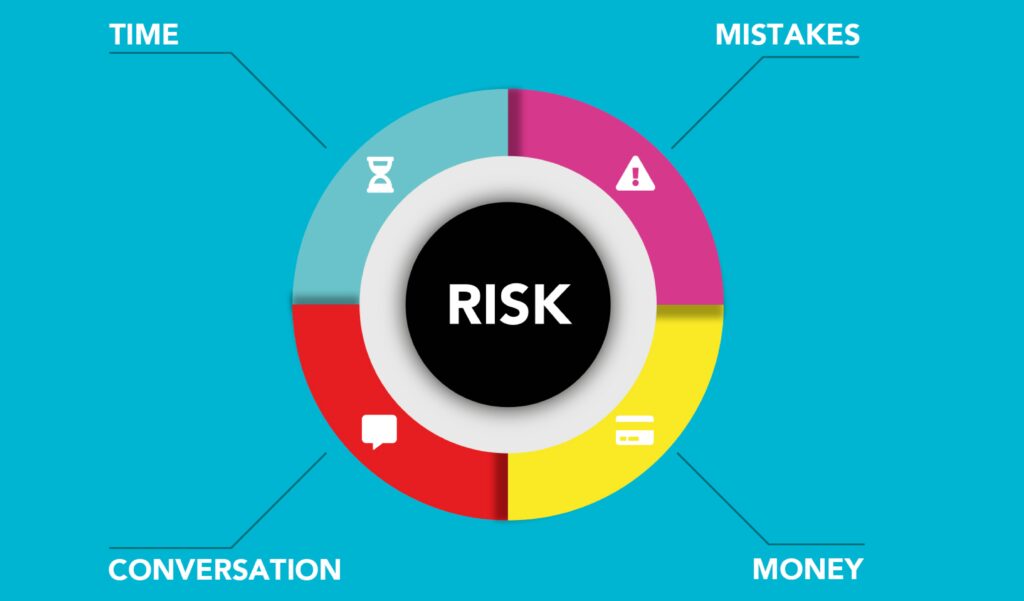
The best methods to help in risk mitigation may include change management and data timeliness. Data timeliness is one of the essential aspects of the implementation of a new product. It is the accessibility and availability of data in making the necessary decisions. If an organization has available and accessible data, it gives room for smart decision-making and an understanding of the product’s future expectations. If the essential information about CDSS is available to the stakeholders and the team, it will be easier for everyone to understand and see what to expect. They can also see how much it has impacted the lives of the previously implemented facilities. Lastly, it will help them know what to expect and control the possible risks before they occur. Change management is the method that an organization uses to implement change (Cameron & Green, 2019). Before an organization implements change, they must develop an approach to ensure a beneficial transition as it mitigates disruption. With a calculated strategy, an organization can see the possible risks that may come and prevent them before they occur.
Evaluate existing policies/processes which need to change to accommodate the implementation of the CDSS.
Adopting the medical-related clinical decision support system is majorly hindered by the cost surrounding implementing the plan. It may be difficult for some medical institutions to consider implementing the system because the costs of implementing the system and maintaining the system are considered too high. Further, adopting the approach also requires appropriately training the staff who will be interacting with the system for effective performance, which is also costly in terms of time and finances. Another hindrance to the implementation of the CDSS is the lack of major existing information systems in several medical institutions. Major networks like EHRs and CPOEs should be made available to most major hospitals to implement the CDSS. Further, CDSS vendors should provide the strengths and setbacks of a system before giving it to the user (Sutton et al., 2020). The vendor should provide an accurate and current knowledge base and the knowledge base sources. On top of that, the vendor should rule out the estimated amount of training required to ensure efficiency and safety.
Implementation Goals & Evaluation (20 points):
Compose the goals/outcomes which prove the success (or lack thereof) of the solution’s implementation.
The CDSS can be considered successful when it has achieved specific outcomes. Most importantly, the CDSS must prove to be improving the standards of patient care. The system provides enhanced communication patterns to various healthcare system disciplines, enhanced accessibility to references on best healthcare practices, minimized medical errors, and unfortunate drug events that all add up to improved patient outcomes. On top of that, the system should recommend a comprehensive treatment plan for a patient and provide guidelines for the clinicians to adhere to. While the CDSS is achieving all these outcomes aimed at patient care, it is observed that the organization’s expenses are cut down (Ahmadian et al., 2011). Minimizing costs is also another goal that proves the success of implementing the clinical decision support system.
Describe the framework or theory to be utilized as the conceptual underpinning of the project and assist in evaluating the project.
The most favorable theory for evaluation and conceptual underpinning of this project is the theory of change. The idea of change describes and gives a clear picture of how and why a particular desired change or goals will occur. It works in a backward nature where, after identifying the expected goals, then figure out the outcomes required to achieve the goals. This approach helps the end-users understand how the necessary products are linked to the desired long term goals. This encourages better planning now that the required outcomes are well known. For instance, in a health institution situation, the long term goal is to deliver quality health care. One required result is ensuring the clinicians are well trained to bring out the best healthcare system regarding health care providence matters. When the facility is aware of facts like this, it is easier to plan better health care providence. The change theory also makes it possible for evaluating the system. It makes it possible to keep tabs on the progress on the road to long term goals.
Design the methodology of obtaining feedback to measure the success of the solution’s implementation.
The most relevant success factor of a CDSS is its integration into the workflow. Feedback from physicians and other healthcare providers within the medical institution can measure how well the system integrated into the workflow. The CDSS is meant to help healthcare providers by giving guidelines on how to go about the system’s treatment plans. Positive feedback from the physician, possibly saying their work has been eased and the health outcomes are better, proves that the implementation of the CDSS was worth it. On the other hand, feedback from patients is also a precise measure of how well the CDSS solves the problem. Positive feedback from the patients confirms success, while negative feedback ensures that the patients are not content with the system’s operations.
Discuss the milestones that must be achieved before further-roll out of the CDSS occurs across the organization.
There is a need to improve the system’s effectiveness to be an excellent intermediary between the physician and the patient. Diagnostics and treatment recommendations should be clear and reliable. When this is achieved, further rollouts of the system can occur across the organization. Some of the development approaches that are required to make the course recommendable for other rollouts include:
References
Ahmadian, L., van Engen-Verheul, M., Bakhshi-Raiez, F., Peek, N., Cornet, R., & de Keizer, N. F. (2011). The role of standardized data and terminological systems in computerized clinical decision support systems: literature review and survey. International journal of medical informatics, 80(2), 81-93.
Cameron, E., & Green, M. (2019). Making sense of change management: A complete guide to the models, tools and techniques of organizational change. Kogan Page Publishers.
Castaneda, C., Nalley, K., Mannion, C., Bhattacharyya, P., Blake, P., Pecora, A., … & Suh, K. S. (2015). Clinical decision support systems for improving diagnostic accuracy and achieving precision medicine. Journal of clinical bioinformatics, 5(1), 4. https://link.springer.com/article/10.1186/s13336-015-0019-3
Falconi, T. M. (2014). Global stakeholder relationships governance: An infrastructure. In Global Stakeholder Relationships Governance: An Infrastructure (pp. 1-55). Palgrave Pivot, London.
He, J., Baxter, S. L., Xu, J., Xu, J., Zhou, X., & Zhang, K. (2019). The practical implementation of artificial intelligence technologies in medicine. Nature medicine, 25(1), 30-36. https://www.nature.com/articles/s41591-018-0307-0
Ingebrigtsen, T., Georgiou, A., Clay-Williams, R., Magrabi, F., Hordern, A., Prgomet, M., … & Braithwaite, J. (2014). The impact of clinical leadership on health information technology adoption: systematic review. International journal of medical informatics, 83(6), 393-405.
Kirchner, J. E., Parker, L. E., Bonner, L. M., Fickel, J. J., Yano, E. M., & Ritchie, M. J. (2012). Roles of managers, frontline staff and local champions, in implementing quality improvement: stakeholders’ perspectives. Journal of Evaluation in Clinical Practice, 18(1), 63-69.
Maben, J., Peccei, R., Adams, M., Robert, G., Richardson, A., Murrells, T., & Morrow, E. (2012). Exploring the relationship between patients’ experiences of care and the influence of staff motivation, affect and wellbeing. Final report. Southampton: NIHR service delivery and organization programme.
Miller, A., Moon, B., Anders, S., Walden, R., Brown, S., & Montella, D. (2015). Integrating computerized clinical decision support systems into clinical work: a meta-synthesis of qualitative research. International journal of medical informatics, 84(12), 1009-1018.
Miner, L., Bolding, P., Hilbe, J., Goldstein, M., Hill, T., Nisbet, R., … & Miner, G. (2014). Practical predictive analytics and decisioning systems for medicine: Informatics accuracy and cost-effectiveness for healthcare administration and delivery including medical research. Academic Press.
Pope, C., Halford, S., Turnbull, J., Prichard, J., Calestani, M., & May, C. (2013). Using computer decision support systems in NHS emergency and urgent care: ethnographic study using normalisation process theory. BMC health services research, 13(1), 1-13. https://scholar.google.com/scholar?hl=en&as_sdt=0%2C5&q=The+physicians+play+a+significant+role+because+they+will+work+hand+in+hand+with+the+CDSS%2C+and+they+must+give+positive+feedback+to+consider+implementation.&btnG=
Sutton, R. T., Pincock, D., Baumgart, D. C., Sadowski, D. C., Fedorak, R. N., & Kroeker, K. I. (2020). An overview of clinical decision support systems: benefits, risks, and strategies for success. NPJ Digital Medicine, 3(1), 1-10.
Wang, K., Bai, X., Li, J., & Ding, C. (2010). A service-based framework for pharmacogenomics data integration. Enterprise Information Systems, 4(3), 225-245.
As a renowned provider of the best writing services, we have selected unique features which we offer to our customers as their guarantees that will make your user experience stress-free.
Unlike other companies, our money-back guarantee ensures the safety of our customers' money. For whatever reason, the customer may request a refund; our support team assesses the ground on which the refund is requested and processes it instantly. However, our customers are lucky as they have the least chances to experience this as we are always prepared to serve you with the best.
Plagiarism is the worst academic offense that is highly punishable by all educational institutions. It's for this reason that Peachy Tutors does not condone any plagiarism. We use advanced plagiarism detection software that ensures there are no chances of similarity on your papers.
Sometimes your professor may be a little bit stubborn and needs some changes made on your paper, or you might need some customization done. All at your service, we will work on your revision till you are satisfied with the quality of work. All for Free!
We take our client's confidentiality as our highest priority; thus, we never share our client's information with third parties. Our company uses the standard encryption technology to store data and only uses trusted payment gateways.
Anytime you order your paper with us, be assured of the paper quality. Our tutors are highly skilled in researching and writing quality content that is relevant to the paper instructions and presented professionally. This makes us the best in the industry as our tutors can handle any type of paper despite its complexity.

Recent Comments