Case Scenario
In early 1975, brothers John and Michael Phillips founded the Stone Horse Supply Company. John and Michael, both horse riders and horse owners, had developed a horse feed to keep their own horses healthier and happier and found it in demand from other locals and neighbors. In response to that growing local demand, John and Michael converted their small home operation into a rented building in town and went forward with the business of manufacturing and selling specialized horse feeds.
Through the late 1980s and throughout the 1990s, the Rock Horse Food Supply Company enjoyed modest prosperity, providing niche products to the local area with their products selling in most of the nearby counties. However, in early 2006, the situation began to dramatically change. In early 2006, John and Michael were contacted by representative of the largest chain of stores in the region. One of the officers of the large chain was a horse owner and had been buying the special horse feed for his horse. The officer felt that because she enjoyed the product so much and knew that other local customers had used the product and perhaps the product could have success on a statewide or even a national scale.
Since its onset, John and Michael had run their business on virtually a manual basis. Suppliers were mostly local with sourcing decisions based on the supplier’s proximity. Forecasting and ordering from suppliers were completed through phone calls and faxes with new orders based on manual counts rather than any systematic process. Stone Horse Supply Company often found itself with either excess material or expediting material in from suppliers at the last minute to keep from missing a customer deadline. Likewise, Stone Horse Supply Company was in the same facility it had started in, a smaller facility that had an unusual layout that John and Michael had made minor modifications to through the years to adapt to problems encountered during those years.
While John and Michael were excited about the prospect of the company and its product becoming a mainstream product with vastly increased sales, they both knew that they were already struggling to meet current customer demand and that the current methods used to run the company would be insufficient as it entered this next phase. More specifically, John and Michael were concerned about the company’s ability to order and maintain the correct inventories to meet the new sales projections or even if many of its suppliers could meet the higher volumes. John and Michael also were concerned about how they would get the materials to Stone Horse Supply Company because they currently used a single company truck to pick up most of the local materials. Finally, John and Michael were deeply concerned about inventory levels and the cash required maintaining those inventories because they were already experiencing excess cost and issues in this area.
Having decided to move forward, John and Michael’s company faced many questions regarding the new sales opportunity. Both John and Michael knew that while the technology they had to offer was superior to any other product of that type currently on the market, they also knew their company needed help in developing a supply chain strategy to ensure that this fantastic new sales opportunity did not overwhelm the company and end in failure.
Your task starts with assisting John and Michael with an assessment of their current and desired situations. You will follow with assisting Stone Horse Supply Company in developing a supply chain that will support its future operations while also knowing that now that John and Michael’s product is going mainstream that there is great likelihood that other competitors will follow and that any strategy must address the future competitive landscape of the company.
ASSIGNMENT
John and Michael, the owners of the Stone Horse Supply Company, are very excited about the new business opportunities their company is going to face. One of the obstacles that they are concerned about is how the business is going to support the growth in customers and locations. With that in mind, John and Michael ask that you prepare a report for them explaining stock-outs and how companies approach and resolve issues relating to growth.
For this assignment, you must submit a report consisting of 1,500 to 2,000 words in which you explain stock-outs and how companies approach and resolve issues relating to growth. For full-credit, you must address the following in your report:
Explain the purpose of using stock-outs to control inventory.
What are the costs associated with using stock-outs?
What is the demand for stock-outs?
Explain in detail the ways to measure product availability.
Explain the importance of the level of product availability.
Provide at least 3 of the factors that affect the optimal level of product availability.
Research and discuss a company that has gone through times of growth and seen the effects of stock-outs.
Provide at least 3 recommendations, to John and Michael, of how not to sustain problems with stock-outs when dealing with an expansion.
Efficiency in the Supply Chain
Explain the purpose of using stockouts to control inventory
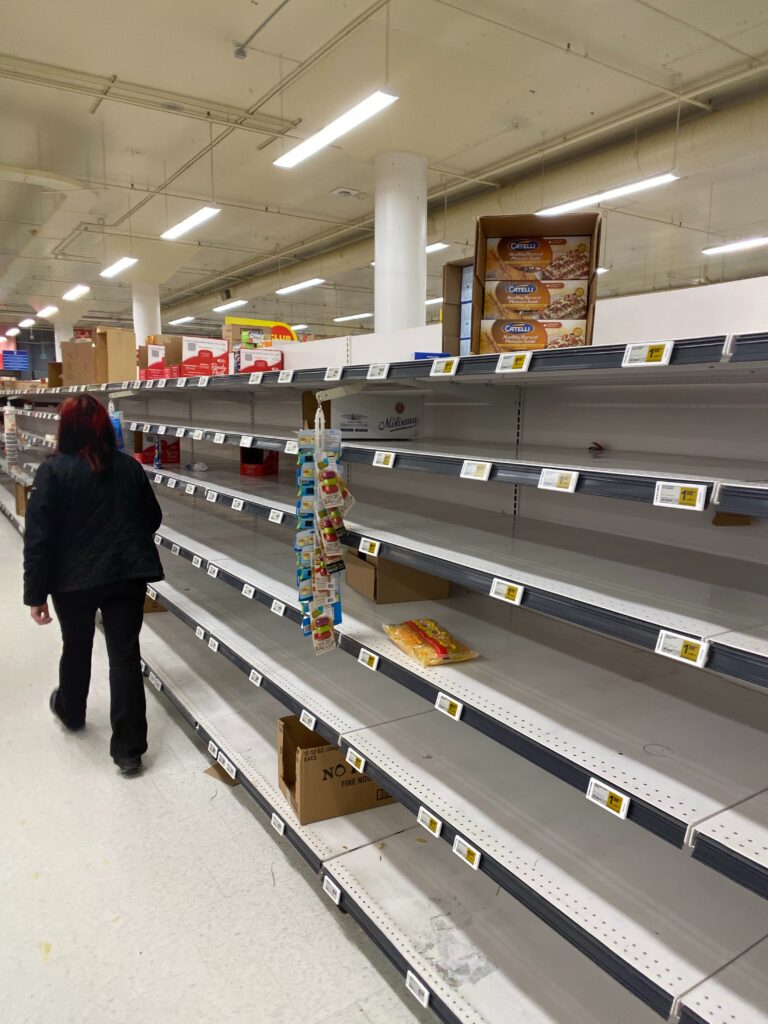
Stock-out also referred to as out-of-stock, describes an event where the inventory for a given product is finished. At this point, the product is no longer available for purchase at the retail level. However, the work may still be available at other stages of the supply chain. It is possible to document stockouts in a certain amount of time within an organization. It can either be within weeks or months (Groenevelt et al., 2014). However, it is essential to note that in a company with a supreme stock management system, and it is correctly put in place, the stock-out duration becomes minimal. Inefficiencies that arise at any supply chain stage are the leading causes of stockouts. These inefficiencies may include inadequate procurement funds required for the production of goods and services, and insufficient buffer stock of all the necessary products at levels of the supply chain, non-participatory and inadequate forecasting. They may also include inefficient distribution systems at both the regional and national levels and inaccuracy in record keeping. Therefore, companies can use stockouts to control their inventories. However, costs like overstocking can be applicable in measuring the availability of their products. Therefore, organizational managers should consider factors like quick response and postponement whenever they are dealing with expansions. In doing so, they will sustain stock-out problems.
What are the costs associated with using stockouts?
Costs associated with stockouts are called stock-out costs. It is the income lost and expenses affiliated with a shortage of inventory. Fees due to stock-outs can arise in two ways, namely:
What is the Demand for stockouts?
Most retailers often react to stockouts instead of taking various measures to prevent them. Here are some ways they can reduce stockouts and ensure their clients are not only happy but also satisfied;
Accurately forecasting demands
One of the most common reasons for stock-out is inaccurate forecasting inventories. If a company accurately predicts how much an inventory will need and controls or prevents the stock-out problem, it will be more comfortable. It may be easier for businesses that primarily depend on seasons like winter and summer sports equipment to predict a specific’s product demands. If organizations can calculate lead times, they may easily plan for busier shopping periods than those that are not.
Reconciling item counts disparities
In most cases, stockouts occur where there are item count differences from one inventory system to the next. It is impossible to eliminate human errors. However, an organization may avoid these disparities by ensuring its data inventory is well updated.
Explain in detail the ways to measure product availability.
To measure the product availability, an organization uses the cycle service level of their fill rate. The service rate the percentage of the customer demand that is satisfied with the available inventories (Tenter et al., 2017). Syncing data between bricks-and-mortar locations and online channels make it possible for retailers to manage their stock effectively.
The level of the available product = the performance of the supply chain. Therefore, a higher level of the products available is equal to extensive inventories. Let us take the example of a company that sells apparel among ski jackets. The season where ski jackets sell the most is from November to February. Before the selling season begins, a buyer buys the ski jacket supply for the manufacturers’ whole season. In this case, when calculating the product availability level, the manager of this company must balance the losses from having several unsold jackets and the lost profits from turning some of their customers away.
Explain the importance of the level of product availability.
Product availability is an essential aspect of the business world. Customers everywhere search for reliable and convenient service providers with a constant flow of goods whenever they need it. The level of product availability positively contributes to an organization, and here are some of the ways how;
Provide at least 3 of the factors that affect the optimal level of product availability.
Cost of production
The production cost implies a decrease in product availability if the cost of production decreases and vice versa. There is an inverse relationship between the cost of production and the availability of a product for supply.
Under stocking Cost
If a company undergoes inventory problems, the chances are high that they could be making various mistakes. However, a company sometimes experiences stocking because they do not have enough money to continue production. There are chances that the demand for products will be higher than their availability in the market with little show.
Possible scenarios
These may include seasonal items that have one order in a season. They are like one-time orders that occur when a quantity discount is offered, seasonal items ordered per season, continuously stocked items and demand during stock out are backlogged or lost.
Research and discuss a company that has gone through times of growth and seen the effects of stockouts.
Walmart is an example of a company that has experienced stockouts, but it survived through it. For years, Walmart has struggled to keep its shelves stocked with the merchandise they need. In 2011, Walmart had missing goods, and it hired Acosta Inc. firms to help it track down their interests (Ciravegna & Brenes, 2016). Unfortunately, after that, it was still back in the red zone in 2013. In a meeting during this year, the Walmart’s CEO announced that their stock issue was worsening, and it was becoming a threat to them. The following year, 2014, the managers prioritized in-stocks to prevent losses. As of 2016, it announced low earnings once more because there was a surplus in their goods, and they had messy storage spaces.
Provide at least three recommendations to John and Michael on how not to sustain stockouts when dealing with an expansion.
References
Ciravegna, L., & Brenes, E. R. (2016). Learning to become a high reliability organization in the food retail business. Journal of Business Research, 69(10), 4499-4506.
Dye, C. Y. (2012). A finite horizon deteriorating inventory model with two-phase pricing and time-varying demand and cost under trade credit financing using particle swarm optimization. Swarm and Evolutionary Computation, 5, 37-53.
Groenevelt, R. B. R., Opalach, A., Fano, A., & Linaker, F. (2014). U.S. Patent No. 8,630,924. Washington, DC: U.S. Patent and Trademark Office. https://www.uspto.gov/
Kim, M., & Lennon, S. J. (2011). Consumer response to online apparel stockouts. Psychology & Marketing, 28(2), 115-144.
Teunter, R. H., Syntetos, A. A., & Babai, M. Z. (2017). Stock keeping unit fill rate specification. European Journal of Operational Research, 259(3), 917-925.
As a renowned provider of the best writing services, we have selected unique features which we offer to our customers as their guarantees that will make your user experience stress-free.
Unlike other companies, our money-back guarantee ensures the safety of our customers' money. For whatever reason, the customer may request a refund; our support team assesses the ground on which the refund is requested and processes it instantly. However, our customers are lucky as they have the least chances to experience this as we are always prepared to serve you with the best.
Plagiarism is the worst academic offense that is highly punishable by all educational institutions. It's for this reason that Peachy Tutors does not condone any plagiarism. We use advanced plagiarism detection software that ensures there are no chances of similarity on your papers.
Sometimes your professor may be a little bit stubborn and needs some changes made on your paper, or you might need some customization done. All at your service, we will work on your revision till you are satisfied with the quality of work. All for Free!
We take our client's confidentiality as our highest priority; thus, we never share our client's information with third parties. Our company uses the standard encryption technology to store data and only uses trusted payment gateways.
Anytime you order your paper with us, be assured of the paper quality. Our tutors are highly skilled in researching and writing quality content that is relevant to the paper instructions and presented professionally. This makes us the best in the industry as our tutors can handle any type of paper despite its complexity.

Recent Comments