Please provide a written response to the following set of questions and be sure to include references and proper citations. At least a couple of paragraphs per question. The questions need to be fully answered.
Please describe how you understand the English Poor Laws and how it provided a framework for American welfare during the early years of the country?
In the American system, what values were placed on the worthy and unworthy poor?
Who was Dorothea Dix and what did she do?
Discuss the origins of modern social work.
Explain poor houses and outdoor relief programs.
What were settlement houses and why and how did they come about?
Explain how inequality (race, gender, child labor) affected poverty rather than the concept of “moral character.”
Read this brief article on Manifest Destiny: Manifest Destiny. Briefly explain Manifest Destiny and how this general philosophy contributed to inequality, racism, and poverty in the U.S. Describe the attitudes of European colonizers towards Native Americans and Hispanics during this western expansion time period and how that set the stage for inter-generational poverty and disenfranchisement.
History of Social Welfare
Please describe how you understand the English Poor Laws and how they provided a framework for American welfare during the early years of the country?
The English Poor Laws were enacted in 1601 in response to an economic depression. The law allowed local governments to increase taxes and build almshouses (charitable houses that provided financial assistance to dependents), indoor relief (cash, food, etc.), and tools and materials for families to use to find employment (Hansan, 2011). The law required parents to cater for their children. Children with unemployable parents/grandparents would be forced into compulsory apprenticeships to care for their parents.
The English Poor Law (EPL) provided the framework for American welfare by creating a standard definition for people eligible for assistance. The EPL categorized poor people into three groups: the vagrant, involuntary unemployed people, and the helpless. It outlined procedures for dealing with individuals in each of these categories (Hansan, 2011). Likewise, since the 18th century, America has been distinguishing between those deserving of assistance and those who do not. The EPL also provided a framework for the services that could be delivered to the various population, e.g., poorhouses
What values were placed on the worthy and unworthy poor in the American system?
In the eyes of Americans, children, the severely disabled, the elderly, individuals who work, are married, or those widowed with children were more deserving of assistance than others. The undeserving included single parents, prime-age adults, and individuals without children. The public felt the undeserving poor were gratifying their interests at the expense of the private works of others. In fact, the Poor Laws were created to deter the poor from the moral dissolution that caused their dependency. Society believed the undeserving poor were afflicted because of idleness, lack of moral determination, or effort. The Calvinism philosophy also reinforced these beliefs. The philosophy believed that any able-bodied but destitute person was immoral and destined for doom. Therefore, the able-bodied poor were mistreated, and people believed they were undeserving of assistance.
Who was Dorothea Dix, and what did she do?
Dorothea Dix was an advocate who played a crucial role in reforming institutions that housed criminals, prostitutes, the mentally ill and retards. Dorothea visited a jail in Massachusetts, where she witnessed the horrid conditions of the almshouses and jails. The facilities were foul-smelling, unfurnished, and unheated (Glicken, 2011, p.28). These conditions inspired her to advocate for better living conditions for this population. She created a carefully-worded document detailing the conditions of these facilities and presented it to the Massachusetts Legislature (Glicken, 2011, p.28). After heated conversations on the topic, her document won legislative support. Consequently, funds were allocated to the expansion of the Worcester State Hospital, marking the beginning of the reforms.
Discuss the origins of modern social work.
After the Civil war, America started experiencing racism, economic depression and a spike in immigrant populations. These challenges created a need for social programs to help economically and socially displaced people (Glicken, 2011, p. 29). Scientific charity organizations such as the American Charity Organization would come to people’s aid. However, it later became apparent that people preferred a personalized approach to large-scale efforts. This distinction made personalized approaches more popular, setting the ground for modern-day social work. The early social work professionals would provide individualized services to communities. They would also consider what elements in social policies and the environment needed to change to serve the target populations truly.
Explain poor houses and outdoor relief programs.
Poorhouses, also known as almshouses or workhouses, were places where the poor would receive assistance. These poorhouses become a refuge for the frail elderly, the severely disabled, the sick, and homeless children. Most people who lived in the poorhouses could not work but lacked people to care for their needs. Initially, both the worthy and unworthy would congregate in the same setting, but the government eventually created separate facilities for each population.
The able-bodied men were placed in “workhouses.” They were considered unworthy of assistance (Glicken, 2011, p.23). The living conditions in poorhouses were distressing, and their reputation deteriorated. These places were characterized by high death rates, disease rates, illicit births, and mismanagement. Additionally, the government realized it would be more cost-effective for the dependents to live in their own or relatives’ homes than live in the poorhouses.
Outdoor Relief
Outdoor relief programs in early America were rare and opportunities limited. These programs provided the deserving poor with necessities, including bedding, in their own homes. The goal of these outdoor programs was to protect the deserving poor from the degrading conditions of the poorhouses. The individuals eligible for the outdoor relief programs would receive assistance in their households.
Explain how inequality (race, gender, child labour) affected poverty rather than the concept of “moral character.”
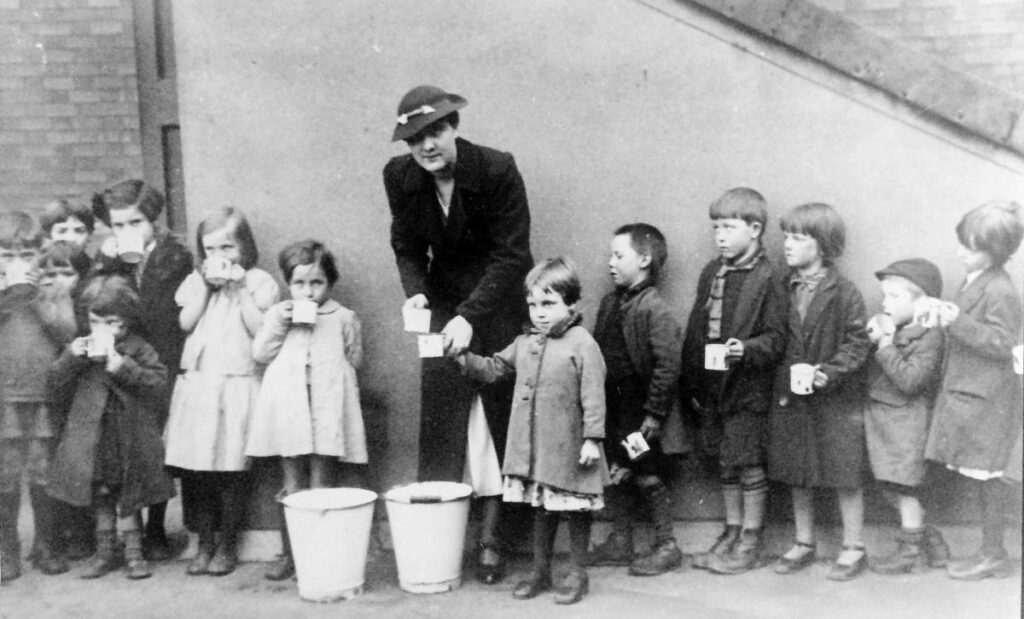
As mentioned before, the traditional society believed the moral character of the dependent caused poverty. However, poverty was caused by structural factors such as gender and racial inequalities and child labor. For example, during that era, women and child exploitation were common social problems (Marx, 2011). Women would first work at home before going to work, meaning they had heavier workloads. These work patterns resulted in debilitating injuries to both children and women, factors that contributed to the poverty. According to Marx (2011), women and children mostly occupied low-skilled jobs that paid lesser wages. Unfortunately, these tasks were simple and repetitive and could be easily learned by immigrants. Hence, competition for those jobs was high.
Additionally, this population worked with dangerous equipment for long hours. In 1914 alone, approximately 700,000 were injured, and 35,000 were killed due to work-related injuries (Marx, 2011). These injuries would force the women and children to work less, reducing their wages (Marx, 2011). These injuries made it difficult for them to hold or maintain jobs, increasing their unemployment rates. These populations were able-bodied, but they could not work due to structural factors underpinning employment practices in the era.
Racial discrimination also contributed to poverty. Minority ethnic/racial groups and immigrants were not allowed to own land. Education levels in these populations were low, meaning their employment opportunities were restricted. These factors contributed to poverty. As demonstrated here, these people were non-disabled and willing to work, but the system made it difficult to move up the social ladder.
Briefly explain Manifest Destiny and how this general philosophy contributed to inequality, racism, and poverty in the U.S. Describe the attitudes of European colonizers towards Native Americans and Hispanics during this western expansion period and how that set the stage for inter-generational poverty and disenfranchisement.
Manifest Destiny was an ideology that believed God destined the United States to expand its dominion across the whole continent. This philosophy led to territorial expansions that displaced many Native Americans and other populations from their homes. The philosophy contributed to racism and inequality by creating the notion that Americans are superior to other races. According to “Manifest Destiny,” (2019), these territorial expansions led to war with Mexico, slavery, and mistreatment of Native Americans, Hispanics, and other non-European populations that the USA had recently occupied. The slavery and dislocation contributed to poverty among the affected populations. The original occupants had to give away their arable land, create new communities, or serve as enslaved people. On the other hand, the expansionists gained access to more natural resources and the pacific trade, giving them more power over the original occupants. These factors explain intergenerational poverty and inequality because poverty, power, and wealth are always passed down to generations.
References
Glicken, M. D. (2011). A brief history of social work: From English poor laws to the progressive policies of President Barack Obama. social work in the 21st century, 23-42.
Hansan, J. E. (2011). Poor Relief in the Early America. VCU Virginia Commonwealth University. https://www.tenement.org/encyclopedia/social_outdoor.htm
Manifest Destiny. (2019, November 15). History. https://www.history.com/topics/westward-expansion/manifest-destiny
Marx, J. (2011, February 24). Women, Settlements and Poverty. Social Welfare History Project. https://socialwelfare.library.vcu.edu/settlement-houses/women-settlements-and-poverty/
As a renowned provider of the best writing services, we have selected unique features which we offer to our customers as their guarantees that will make your user experience stress-free.
Unlike other companies, our money-back guarantee ensures the safety of our customers' money. For whatever reason, the customer may request a refund; our support team assesses the ground on which the refund is requested and processes it instantly. However, our customers are lucky as they have the least chances to experience this as we are always prepared to serve you with the best.
Plagiarism is the worst academic offense that is highly punishable by all educational institutions. It's for this reason that Peachy Tutors does not condone any plagiarism. We use advanced plagiarism detection software that ensures there are no chances of similarity on your papers.
Sometimes your professor may be a little bit stubborn and needs some changes made on your paper, or you might need some customization done. All at your service, we will work on your revision till you are satisfied with the quality of work. All for Free!
We take our client's confidentiality as our highest priority; thus, we never share our client's information with third parties. Our company uses the standard encryption technology to store data and only uses trusted payment gateways.
Anytime you order your paper with us, be assured of the paper quality. Our tutors are highly skilled in researching and writing quality content that is relevant to the paper instructions and presented professionally. This makes us the best in the industry as our tutors can handle any type of paper despite its complexity.

Recent Comments