Competencies:
Analyze laws and ethics to solve business problems.
Evaluate regulatory compliance in the business environment.
Evaluate employment law at the state and federal levels.
Analyze the impact of intellectual property on business functions.
Evaluate the impact corporate and social responsibility has on organizational activities.
Critique ethical decision making in business operations.
Scenario:
You work for Hanson Enterprises, a U.S. based company, which has decided to partner with a company in another country for both economic and philanthropic reasons. Hanson Enterprises will be able to produce their products at a lower cost and can pass those savings onto their consumers all over the world. They have also included a provision in the contract with the partnering company that employees will receive a minimum wage based on U. S. state residency. The company will also provide day care, health insurance, and retirement benefits to the employees. Further, Hanson Enterprises advertised that it will be designating funds to improve the social conditions in the community where this facility is located. You are part of a team that has been sent over to the new facility to ensure all is in accord with the contract, but what you find are employees not receiving the benefits nor the minimum wages promised; in fact, employees are having to work seven days a week with no breaks in their shifts and there are a number of safety issues in plain sight; no funds have been used to improve the community; intellectual property rights are being infringed upon; and bribes are taking place among management and other businesses in the local area.
Instructions:
Review the situation and conduct scholarly research into the laws and regulations presented in the course content. Create an Action Plan Recommendation Report in Microsoft Word (minimum of three pages) to the CEO of Hanson Enterprises addressing:
What legal (consider federal and international laws) and ethical (consider specific ethical theories) issues do you see in this scenario?
Based on the facts, what laws and/or regulations (consider federal and international laws) would address this scenario as it relates to employment law?
Based on the facts, what laws and/or regulations (consider federal and international laws) would address this scenario as it relates to intellectual property (i.e. trademarks and copyright)?
Explain if it is possible to sue for breach of contract, or if there are any contract remedies available.
What are the consequences if the corporate social responsibility (CSR) is not addressed?
What do you think is the best legal and ethical course of action for Hanson Enterprises to take, and why is it in the best interest of the company?
Use at least three credible sources. These should be cited and in APA format.
Action Plan Recommendation Report
Introduction
Hanson Enterprises, a U.S. based company, has teamed up with a company in a foreign country for financial and charitable reasons. The partnership makes it possible for the company to manufacture its products at a lower cost and pass those savings onto the clients worldwide. There is a provision in the contract, which requires that employees receive a minimum wage based on U.S. state residence (McCann, 2018). Therefore, the partnering company is expected to pay a minimum wage for state residents and to provide health insurance, daycare, and retirement benefits to employees as stipulated in the contract. The enterprise had also designated funds to improve the community’s socio-economic conditions in which the facility is situated. In essence, the foreign partner has agreed to implement the project per the federal and international employment laws within the U.S. jurisdiction.
The partnering organization agreed to comply with the contract’s regulatory framework and implement the project in accord with the contractual terms. However, a trip to the facility uncovers that the new site does not comply with the contract terms. First, the designated funds are not being used to improve the community as anticipated. Besides, the promised minimum wage and benefits to workers have not been implemented. There are also several safety concerns, including staff working seven days a week with no breaks in the shifts and management participating in bribery and infringements of intellectual property rights. The report discusses the legal and ethical issues arising from the contract. It provides information on federal and international law, employment legislation, intellectual property, contracts, and ethical issues related to CSR that need to be addressed in this contract. Finally, it recommends the available contractual remedies and the appropriate legal and ethical course of action taken by the company.
Legal and Ethical Issues
The United States has hundreds of federal laws and regulations that impact both the workers and employers. They range from pay specifications to family leave benefits and are enforced by the U.S. Department of Labor. Essentially, there is a diverse range of federal, state, and local laws and regulations and codes that apply to all U.S enterprises irrespective of their location (Drachsler, 2020). Therefore, Hanson Enterprises and its foreign partner must comply with employment regulations on minimum wage, workplace safety, medical coverage, social security, unemployment benefits, and family leave. In assessing the situation, it is necessary to apply the various laws governing employer-employee relations. Ethical issues are also involved in evaluating benefits, including daycare, employees working seven days a week, and corporate social responsibility.
Hanson Enterprises’ partnering organization is obliged by contract to abide by the four primary federal employment and labor laws. They are the Fair Labor Standards Act (FLSA), the Employee Retirement Income Security Act (ERISA), the Family and Medical Leave Act (FMLA), and the Occupational Safety and Health Act (OSHA). The FLSA determines the legal minimum wage and overtime pay of one-and-one-half times the standard rate of pay and is critical in evaluating some of the companies’ existing legal issues. Such issues include the failure to pay a minimum wage, staff slated for seven days a week without a break, the stipulation for overtime pay, and reasonable time off for breastfeeding mothers. The ERISA policy monitors the employer’s pension plans and the requisite fiduciary, disclosure, and reporting systems (Drachsler, 2020). The FMLA requires the employer to provide employees with up to 12 weeks of unpaid, work-protected leave on family-related issues such as childbirth, childcare, and illness. Then, the Affordable Care Act makes health insurance a right for laborers in medium and large enterprises. Other issues include safety at work imposed by the OSHA Regulation and existing intellectual infringements of patents as governed by the U.S. Article I of the Constitution, Section 8. The Foreign Corrupt Practices Act also makes it unlawful for U.S. businesses to offer bribes to local companies in foreign countries.
Hanson Enterprises can conduct business in foreign markets if it chooses to be flexible enough to comply with local legislation and regulatory guidelines. Whenever a business expands overseas, it operates under two sets of laws from two countries. The treatment of intellectual property by the World Trade Organization is one of the recognized issues of such expansion. Intellectual property and trademark protection can be done by ensuring that the regulatory agencies at that location acknowledge and safeguard businesses’ proprietary needs. The International Labor Organizations 184 Conventions deal with lack of breaks or rest, non-payment of the minimum wage, and safety concerns. Similarly, the 1952 Universal Copyright Convention is vital in dealing with breaches of intellectual property. There is also the World Intellectual Property Organization (WIPO), among the United Nations’ 15 principal organs. WIPO is dedicated to the protection of works and authors’ copyright in the online realm (Duxbury, 2020). WIPO’s negotiations, such as the Agreement on Trade-Related Aspects of Intellectual Property Rights, help guard against I.P. rights infringements within the global legal framework.
Business ethics are vital to modern businesses, especially in light of increased corporate scandals. For this reason, business aspects should be undertaken professionally to mitigate illegal practices that might affect the credibility of a company. Four ethical theories could be applied to this situation: deontology, utilitarianism, rights, and virtues (Koh & Reamer, 2020). Unethical practices, such as bribery, increase the business’s inequalities and harm other companies by benefiting a few individuals in the market. People who participate in corruption may think that they are adopting a utilitarian ethical approach because they speculate the outcome of their preference and do not allow for a mutually agreeable decision. Managers must not involve themselves or their companies in bribery acts in the exercise of virtue ethics. Appropriate staff treatment is not taking place in the current scenario because workers are not adequately compensated, and they do not have the mandatory break times. The company must strive to protect the rights set by both the international and federal laws by adopting utilitarianism and deontological theories. Actually, the utilitarianism theory introduces a set of conflicting rules that may aid in service delivery effectiveness, while the deontological ethical approach preserves dignity and respect among workers.
Employment Law
Employment law is a wide area of the law that regulates the employer-employee relationship at both the state and federal level. It also covers a multitude of distinct subjects with a typical role of preserving workers’ rights. For workers, such legislation helps prevent discrimination, foster health and safety, set the minimum amount of economic support needed, and avoid work disruption due to management – employee disputes (Malesky & Mosley, 2018). The partnering firm operates in the international sphere and hence subject to the International Labor Organization (ILO), which protects workers’ rights besides the employment laws of the two partnering nations. Labor laws fall within the scope of the ILO Minimum Wage-Fixing Machinery Convention of 1928 (no.26). Two of the most critical employment-related concerns for the U.S. in this situation are the minimum wage and incentives that are not given. The U.S Code 29, Chapter 8, Section 206 of the FLSA provides for compensation to employees by firms at a federal minimum wage involved in producing goods (Drachsler, 2020). Many states have ratified their minimum wage laws, typically at a rate higher and legally binding under state legislation. A reasonable period for nursing mothers for one year after the child’s birth is also covered by section 207. Lack of time breaks is an ethical issue for employees and is therefore not protected by law.
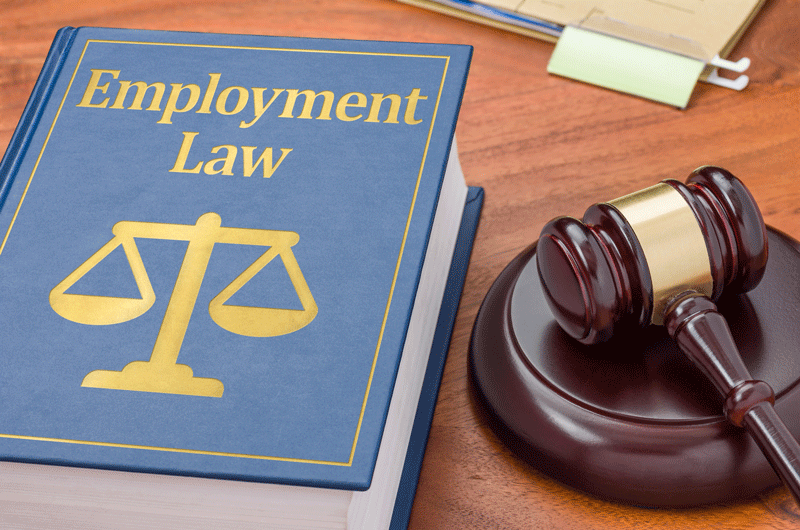
The primary regulatory employment laws relevant to this case are Section 1981 of the Civil Rights Act of 1866, Title VII of the Civil Rights Act of 1964, FLSA, FMLA, ACA, the National Labor Relations Act (NLRA), and OSHA (Drachsler, 2020). For example, the FLSA sets out the federal hourly minimum wage and labor laws for specific industries. The other legal issues about safety at work and healthcare and retirement benefits. The ERISA legislation outlines the principles for voluntary retirement and health plans in the private sector. It also protects individuals in such scenarios. Health coverage is also needed under the Affordable Care Act (ACA) for firms with 50 or even more full-time workers. OSHA law guarantees healthy and safe working conditions for workers by implementing outreach, training, education, and assistance standards. It is also essential to keep in mind that the numerous foreign agreements and treaties, and even the provisions on contract terms, cover the protection of employees. For example, the ILO acknowledges the need for workers to get rest to protect their overall health. The 1957 Weekly Rest Convention (No. 106) offers a minimum of 24 hours of rest during a seven-day workweek (Drachsler, 2020). National preventive safety and health culture are also acknowledged by the 1981 Occupational Safety and Health Convention (No. 155) (no. 155).
Intellectual Property Rights
Intellectual property is the right offered to individuals over the creation of their minds. They grant the creator the exclusive right of using their development for a given period. Employees may devise or generate innovations while at the workplace, which need to be protected by intellectual property law. Such a law should distinguish between employees’ work and joint creation at the workplace job that requires some level of investigation. As a requirement, the employer should have written agreements stating the right to own and license products under the business’s employment (Dreyfuss & Pila, 2018). Factors that influence property rights are whether the work has been completed within the contract of employment where the employee is an independent consultant, whether such an employee has been hired to create a specific invention, and whether the design has been made at the employee’s own time despite the relationship with the business. In essence, the partnering company should comply with the U.S. Patent and Trademark and U.S. I.P. protection guidelines, as well as, the Copyright Offices for copyright and patent matters.
Hanson’s partner organization’s business needs are to determine the ownership of inventions and ensure that no existing personal property protections are registered. Breaches of intellectual property rights fall within the framework of the WTO on an international scale. The WTO protects workers’ interests and vigorously defends I.P. rights through its rules governing the multilateral trading system. WIPO grants the right of distribution, the right of rental, and the right of communication to the public to which the contracting parties must comply (Duxbury, 2020). It also states that governments must ensure that I.P. rights can be enforced to prevent infringements. Under the U.S. Trade Act. The President shall be empowered to negotiate trade agreements under the General Agreement on Tariffs and Trade or the GATT. The Universal Copyright Convention, 1952, ensures that copyright protection for all countries is appropriate for all nations of the world and that the Contracting State provides for adequate and effective protection of copyright rights.
Contract Remedies
A contract is a mutually and legally binding undertaking made by at least two parties to fulfill an obligation. Contracts may be written, verbal, or a mixture of both. They ensure that one’s interests are legally protected, and both parties meet their obligations as agreed. If a partner breaks the contract, specific options, known as remedies, would be accessible to the parties. For a legal agreement to be valid, it should have a definite purpose, mutual consent, consideration, competent parties, and legitimate assent. In the U.S, the Hanson group could claim for breach of contract, but it must assert a contract, infringement of that contract, and damage caused. Unfortunately, overseas litigation is not a straightforward process and involves independent countries with their laws, procedures, evidence, testimonies, and exploration guidelines.
Legal systems of contracting parties in an international contract have diverse structures, and litigation could happen with both parties’ consent. Thus it is implausible that Hanson Enterprises would be able to sue for contract breach. The reason for this position is that even though consent may be received, there are a plethora of obstacles, including language barriers, identification of the legal partners in the other country, and attending court hearings, which can be burdensome. Dispute resolution would be an ideal option when both parties consent to the need to deal with the conflict via mediation or arbitration. This option would lower the cost of remedying the problems and allow the partner to enhance the working conditions, perks, and wage levels. Alternative dispute resolution would also create an opportunity for discontinuing occupational safety hazards and gross violations of intellectual property rights in a foreign country. If the partner does not wish to pay damages, fulfill its obligations, or adhere to any future commitments, then the final option would be to discontinue or break the contract or to have litigation recourse.
Corporate Social Responsibility
Corporate Social Responsibility (CSR) is when a business runs sustainably and ethically and deals with its social and environmental impacts. CSR undertaking means the careful interest in human rights, the community, the environment, and the society in which it operates. This approach should be considered when assessing all operational tasks between the partner organizations for business and environmental stewardship. Investments in CSR can also help to build the reputation of the company and enhance its competitive advantage. It may be harmful to the business if there is a plan to make informed choices, and the activities do not portray such commitments. Decreased sales, customer base loss, and social, environmental, and economic distress would occur if firms did not act as intended on CSR initiatives. The immediate impacts are likely to be pollution, job losses leading to reduced customers, and excess capacity for products, all of which impact society.
Recommendation
Contracts are valuable when used correctly. To sustain operations in a foreign country, Hanson Enterprises must maintain its partnership and ensure that workers are well remunerated. Efforts must be made to establish vibrant employee relations, satisfaction, and motivation. Mediation is the recommended way to proceed in the current scenario. The compilation of all the current issues affecting the partnership with the relevant laws and regulations is a good starting point. Next, a meeting with the partnering company should be scheduled to raise these issues and discuss action courses. Once the partner has been fully informed of the problems and possible solutions, they can choose to fulfill their obligations, rectify the situation, or revoke the contract. If the contract’s suspension is what they decide to do, Hanson Enterprises must accept the break and not seek damages for the workers or move forward with litigation. If the partner does not choose a specific determination to the situation, then legal action would be a viable opportunity to consider. Besides, efforts should be made to resolve ethical issues between staff and management to optimize working conditions with the employee-focused CSR initiative. A moral code of conduct must be drawn up so that the team understands what is required of them in the workplace. Resolving ethical issues would improve employee engagement, retention, and morality, while CSR initiatives will promote a positive brand image and contribute to business sustainability.
Drachsler, D. A. (2020). Notes On: Amendments Needed to Update and Strengthen Federal Employment Law. Labor Law Journal, 71(3), 178-181. https://www.yalelawjournal.org/article/the-new-labor-law
Dreyfuss, R. C., & Pila, J. (Eds.). (2018). The Oxford handbook of intellectual property law. Oxford University Press. https://www.oxfordhandbooks.com/view/10.1093/oxfordhb/9780198758457.001.0001/oxfordhb-9780198758457
Duxbury, A. (2020). The role of WIPO as an international organization. In Research Handbook on the World Intellectual Property Organization. Edward Elgar Publishing. https://www.law.ox.ac.uk/centres-institutes/oxford-intellectual-property-research-centre/publications
Koh, B. D., & Reamer, F. G. (2020). Why Moral Theories Matter: A Review of Ethics and Adoption Literature. Adoption Quarterly, 1-20. https://www.tandfonline.com/doi/abs/10.1080/10926755.2020.1719255
Malesky, E. J., & Mosley, L. (2018). Chains of Love? Global Production and the Firm‐Level Diffusion of Labor Standards. American Journal of Political Science, 62(3), 712-728. https://onlinelibrary.wiley.com/doi/abs/10.1111/ajps.12370
McCann, S. J. (2018). US state resident big five personality and work satisfaction: The importance of neuroticism. Cross-Cultural Research, 52(2), 155-191. https://journals.sagepub.com/doi/abs/10.1177/1069397117723607
As a renowned provider of the best writing services, we have selected unique features which we offer to our customers as their guarantees that will make your user experience stress-free.
Unlike other companies, our money-back guarantee ensures the safety of our customers' money. For whatever reason, the customer may request a refund; our support team assesses the ground on which the refund is requested and processes it instantly. However, our customers are lucky as they have the least chances to experience this as we are always prepared to serve you with the best.
Plagiarism is the worst academic offense that is highly punishable by all educational institutions. It's for this reason that Peachy Tutors does not condone any plagiarism. We use advanced plagiarism detection software that ensures there are no chances of similarity on your papers.
Sometimes your professor may be a little bit stubborn and needs some changes made on your paper, or you might need some customization done. All at your service, we will work on your revision till you are satisfied with the quality of work. All for Free!
We take our client's confidentiality as our highest priority; thus, we never share our client's information with third parties. Our company uses the standard encryption technology to store data and only uses trusted payment gateways.
Anytime you order your paper with us, be assured of the paper quality. Our tutors are highly skilled in researching and writing quality content that is relevant to the paper instructions and presented professionally. This makes us the best in the industry as our tutors can handle any type of paper despite its complexity.

Recent Comments