OVERVIEW
This course requires one major essay in which you will demonstrate the skills of close reading, literary analysis, and thesis development that you have practiced in the Discussion Boards. This essay is worth 20 points and must be 1300 – 1500 words in length. Your essay must specifically address the prompt below. Any essay that is off topic, fails to follow the proper submission procedures, or demonstrates evidence of plagiarism or another form of academic dishonesty, will receive a zero. Please read the prompt and submission requirements carefully. You should also look at the resources in the Week 11 module folder, including the Writing Tutorial videos and the Essay Composition Forum discussion board.
ESSAY TOPIC
status quo, n.: “The existing state of affairs.”
~ Oxford English Dictionary
Many works of literature we’re reading this semester feature figures who struggle against the status quo in one way or another—figures who speak truth to power, who seek to call attention to historically entrenched inequalities, who seek to fight oppression, and who consciously defy societal expectations of them. Essentially, many characters in our texts resist and challenge “the existing state of affairs” during their time, consciously or unconsciously striving for change. These figures vary widely in terms of what—and who—they struggle against and what they seek in their struggle, but in all cases they strive for changes that have implications that extend beyond just their own lives.
In this essay, your task is to construct an argument—supported by textual evidence, close reading, and historical context—about figures from two different course texts (see below list) that struggle against the status quo and strive for change. Your essay should address both the causes and contexts of these two characters’ struggles: how and why they strive for changes, for example, and against what/whom they struggle. In the process, your argument should make claims about the broader significance of their struggles in terms of the societies in which they live. When considering this broader significance, remember that literature itself is often a powerful form in which authors give voice to their critiques of society.
POSSIBLE TEXTS
Choose two texts from the list below
Note: You can only choose one text from each bullet point. This means you cannot write about both Arabian Nights and “Barn Burning,” for example; your two texts need to be from two different bullet points.
GETTING STARTED
You should choose two texts that speak to one another in a meaningful way. You could, for example, choose two texts in which figures struggle against similar aspects of the status quo of their respective societies, analyze two figures whose emotional response to their struggle is similar, or choose figures who face similar consequences because of their struggle. You might, on the other hand, choose texts in which there are some similarities between the characters, but also meaningful differences.
Your most important goal should be to choose two texts that will allow you to bring the unique dimensions of each text into sharper focus. Finding meaningful connections between the two texts you choose will allow you to construct an essay that aims at true synthesis and will allow you to make an argument that is more sophisticated than a simple compare and contrast essay.
General questions to think about as you choose your two texts and begin to plan your essay:
REQUIRED ESSAY COMPONENTS
1) Thesis Statement: Make sure that you have a clear thesis statement that makes an argument about the specific significance of how figures in two different texts struggle against the status quo. Your thesis statement can be more than one sentence; indeed, sometimes two sentences are needed to articulate and flesh out your argument. Your thesis statement should be in the first paragraph of the essay and should be easy to identify by readers.
2) Textual Evidence: Make sure to support your argument with evidence from both of your chosen texts. Evidence will include quotes and examples from the text to demonstrate your argument, but also to provide you with passages to close read and analyze. When quoting a passage, be sure that you properly introduce it, cite it, and analyze it. Quotations should not be used for summary or description purposes; they should be used as textual evidence or as an occasion for close reading.
3) Analysis & Close Reading: Make sure to close read and analyze your textual evidence. Think critically about how the passages you cite demonstrate your argument. Pay attention to individual words and details in your quotes, and explain how they illustrate your claims. Cite the passages you quote from.
4) Engagement with Social and Cultural Context: Make sure that your argument and close readings demonstrate an awareness of historical and social context, specifically as it relates to setting or environment. While we don’t expect you to be experts on any historical culture, we do require that you demonstrate a familiarity with the material covered in the lecture videos, and we require that you engage with the specificity of settings, which vary from culture to culture and are always historically specific.
STRUCTURING YOUR ESSAY
Paragraph 1 (introductory paragraph)
Paragraphs 2, 3, etc. (body paragraphs—as many as needed)
Final Paragraph (conclusion)
QUESTIONS TO CONSIDER FOR SPECIFIC TEXTS
Note: These are simply meant to kickstart your thinking. Feel free to ask other questions and write about other issues not listed here, so long as they address the prompt.
Arabian Nights
William Faulkner’s “Barn Burning”
WWI poetry by Wilfred Owen
William Shakespeare’s Othello
Chimamanda Ngozi Adichie’s “The American Embassy”
Anowa
Jamaica Kincaid’s A Small Place
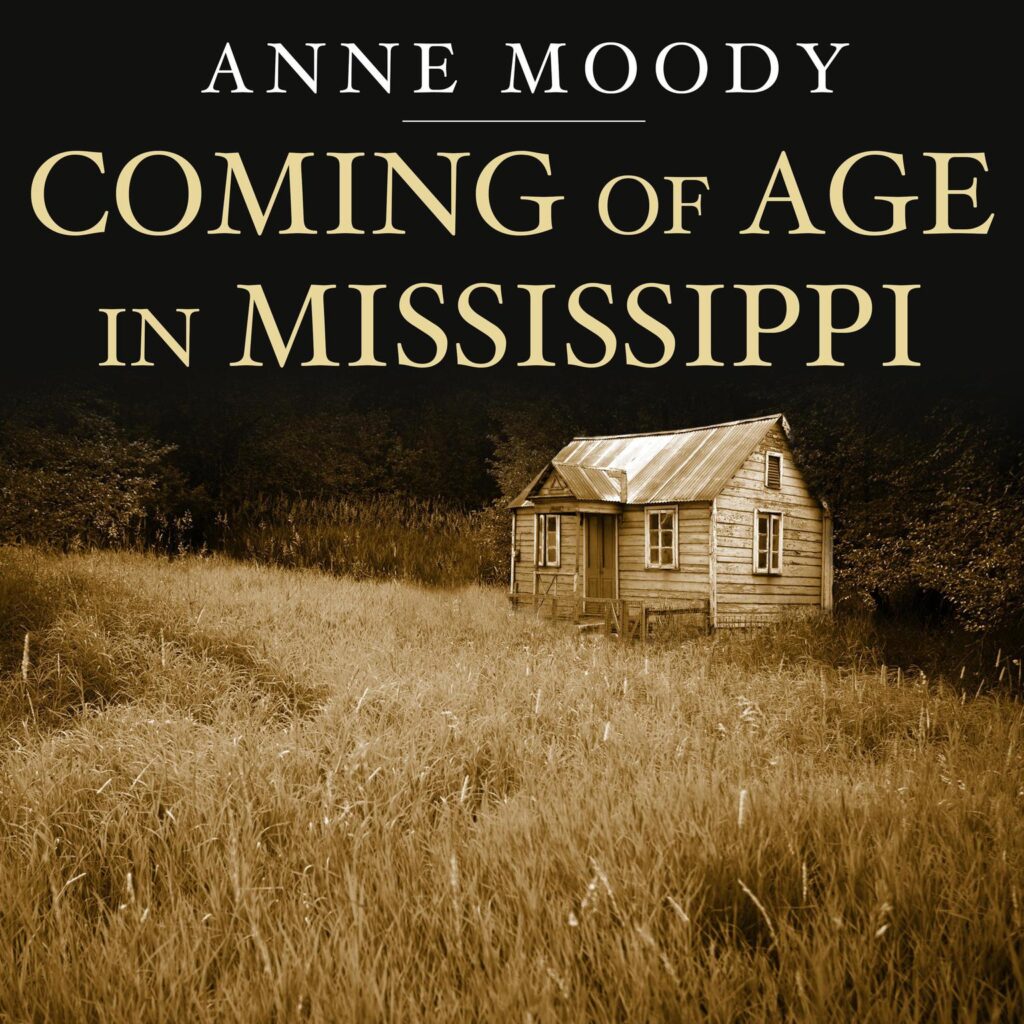
Anne Moody’s Coming of Age in Mississippi
ADDITIONAL REQUIREMENTS
For example, if your name is John Doe, your file name would be: essaydoejohn
Barn Burning and Coming of Age in Mississippi
Introduction
Coming of Age in Mississippi is about Anne’s life, an African American child who grew up in the rural South in a life full of poverty. Things were different in her life than the whites living on the farm with her family. For example, Anne’s house, a black household, had no indoor plumbing or electricity, yet the Carter family was privileged as they had both. As a young black girl growing up, Anne is socially aware of the discrimination and racism that she experiences and what black people go through in her surroundings. However, it is the murder of Emmett Till, a black boy, that evokes her to join the Civil Rights Movement. As an intelligent, strong-willed, independent young woman, she wishes to bring an end to oppression. In the short story “Barn Burning,” Sartoris, a young boy, is faced with a dilemma of whether to stay loyal to his family or the law. For his father, there is nothing more essential, like family loyalty. He is surrounded by conflict and violence as a child as his father continually disagrees with his employers. As a result, Sartoris is overwhelmed by despair, grief, and fear. He struggles to find his place among his family’s demands and his moral ideas. Because these two characters face challenges as young children, both Sartoris and Anne are searching for something more than what society offers them. They are willing to do whatever it takes to make changes in their lives and society.
In Moody’s writing, she talks about several types of racially associated violence inflicted on black citizens. The better part of the violence included shootings, physical assaults, bombings, and burning. The killing of Clift, Anne’s relative among other black men who lived in Mississippi, was a way to scare and inflict fear on black southerners so that they could maintain Jim Crow. Law enforcement used state-sanctioned violence methods at protests and movement rallies. The black Southerners’ bodies were “left lying on the road the road floating in a river (Jace 37),” Anne remembers this, and she believes it was worse than how animals were treated. Anne went through verbal violence as well, because white Southerners often used racial slurs all the time. White people believed verbal exchange displays had a powerful meaning as it was meant to keep every black person in the region in their place. Mrs. Burke insisted and made it clear to young Anne that she had to address her employer the way any servant would. Like any other black person in Mississippi, Anne experiences violence that hurts those close to and around her because of their color. As a result, this influences and encourages her activist work. In addition to this, it helps open her eyes to the racism problem present in America.
From the short story Barn burning, Sartoris is in search of a peaceful life free of his father and family’s oppressive ways. He is searching for peace and freedom, something he has never experienced as he has always been surrounded by conflict and violence all through his life. Throughout the short story, Sartoris refers to grief, despair, and fear as he reveals how much he has struggled to find himself in between his family demands and his ideas of morality. According to Sartoris, peace, dignity, and joy are the promises he can get from a different kind of life, a life that so far seems impossible to achieve in his family. When they leave their previous county after dismissing their charges, his urge to get a new life grows when they arrive at de Spain’s house. The domestic bliss that comes from de Spain estates for the first time gives the boy a temporary comfort. According to him, the “spell of the house” changes everything, and Sartoris hopes that the spell will help change his father’s sinful and criminal ways (William 17). For the first time in his life, Sartoris sees a peaceful future for him and himself, a future full of peace.
Both Anne and Sartoris have had a tough childhood. Anne, a young black girl, has experienced firsthand racism and lived in a country where white people felt superior to blacks. She experienced violence against their people, and as a child, there is nothing much she could do about it. For these reasons, among other racial experiences, she chose to join the activist who fought for equality for black people in America. Sartoris, just like Anne, had not experienced peace in his life. As a child, he was surrounded by conflict and violence. As the story begins, the young boy is in court to testify for the sake of his father, who is facing accusations of burning Mr. Harris’ barn. He is torn between his family loyalty and explaining the truth of the justice system during this point. Even though Sartoris did not testify, he knew his father expected him to lie before the judge for him. As they left the courtroom, Snopes hit Sartoris hard on the head and accused him of intending to tell the judge of his guilt. It is clear to the audience that his environment was not a friendly one for a child. Despite it all, all he wanted was peace and joy to be in his life. He did not fit in his family, and he was continually trying to find his place. Both Anne and Sartoris wanted more than what they could get from society, and they believed the only way to get it was to fight for it themselves.
From both the stories, the two main characters are more vital than most people their age. They have a determination for freedom, and they do not sit and wait for it to come knocking on their door; they look for it. Anne disagreed with the mother as she did not understand why she joined a violence and civil rights movement. Even though her mother was strong for the family when her husband left, she did not plan to fight for black people’s freedom. Anne believed that Black Southerners could also be resistant to change. The civil rights movement’s first and leading goal was to change the way most black Southerners view themselves. They viewed themselves as second-class citizens, and that needed to change. Black Southerners needed to see themselves as Americans worthy of respect and dignity and similar rights as those of white Americans. Anne’s mother, for example, had been brainwashed, according to Anne. It is so because she had lived under the Jim Crow laws ever since she was a child, and she expected and insisted that her children follow them. In addition to these, many black authority figures turned their backs on the activists to have white people’s approval. Anne believed things needed to change, and as a strong-willed individual, she wants the oppression that is going on in America to come to an end. To ensure this happens, she joins the movement when she goes to college.
Sartoris intends to free himself from the oppressive life he has at home. At a young age, he is forced to explore the wrong and right issues that are way beyond his reasoning. For example, he is expected to lie for the sake of his father in court, and when the father suspects otherwise, he delivers a blow to his head and tells him, “you are getting to be a man (William 6),” yet he is merely ten years old. In Sartoris’ world, just like Anne’s, violence is a fundamental element. Living with his father, he has experienced the violent world ever since he was a child. Despite his father’s corrupt ways, he has a sense of justice. His father is irrational and acts without thinking anything. At some point in the novel, Sartoris is forced to act instinctively to prevent the father from burning their new neighbor’s barn.
Conclusion
The two main characters in the two stories are young individuals going through so much for their age. At a young age, Sartoris is faced with a dilemma of staying loyal to the father or the justice system. On the other hand, Anne faces racism as she lives in a world where white supremacy leads to everything. The two are in search of freedom that they can only get if they fight hard. Anne is forced to leave home as her mother disagrees with her being a civil rights movement. She wants the oppressive life Black Southerners face to come to an end. Sartoris has faced violence and conflict all his life, and he is trying to find peace within himself; and he has to choose between supporting his family and staying loyal or pursuing his peace. Anne’s mum had lived by Jim Crow’s laws to the extent that she insisted her children had to follow them, which Anne disapproved of. Sartoris betrays their family honor to search for his peace. He is different from his brother John who blindly follows his father’s ways. The two characters are more similar than most people think.
Works Cited
Anderson, Jace. “Re-Writing Race: Subverting Language in Anne Moody’s Coming of Age in Mississippi and Alice Walker’s Meridian.” a/b: Auto/Biography Studies 8.1 (1993): 33-50. https://www.researchgate.net/publication/342494732_Coming_of_Age_with_Anne_Moody
Faulkner, William. “Barn Burning'(1938).” William Faulkner, Collected Stories (1995): 3-25. https://journals.openedition.org/ejas/9461?lang=fr
As a renowned provider of the best writing services, we have selected unique features which we offer to our customers as their guarantees that will make your user experience stress-free.
Unlike other companies, our money-back guarantee ensures the safety of our customers' money. For whatever reason, the customer may request a refund; our support team assesses the ground on which the refund is requested and processes it instantly. However, our customers are lucky as they have the least chances to experience this as we are always prepared to serve you with the best.
Plagiarism is the worst academic offense that is highly punishable by all educational institutions. It's for this reason that Peachy Tutors does not condone any plagiarism. We use advanced plagiarism detection software that ensures there are no chances of similarity on your papers.
Sometimes your professor may be a little bit stubborn and needs some changes made on your paper, or you might need some customization done. All at your service, we will work on your revision till you are satisfied with the quality of work. All for Free!
We take our client's confidentiality as our highest priority; thus, we never share our client's information with third parties. Our company uses the standard encryption technology to store data and only uses trusted payment gateways.
Anytime you order your paper with us, be assured of the paper quality. Our tutors are highly skilled in researching and writing quality content that is relevant to the paper instructions and presented professionally. This makes us the best in the industry as our tutors can handle any type of paper despite its complexity.

Recent Comments